
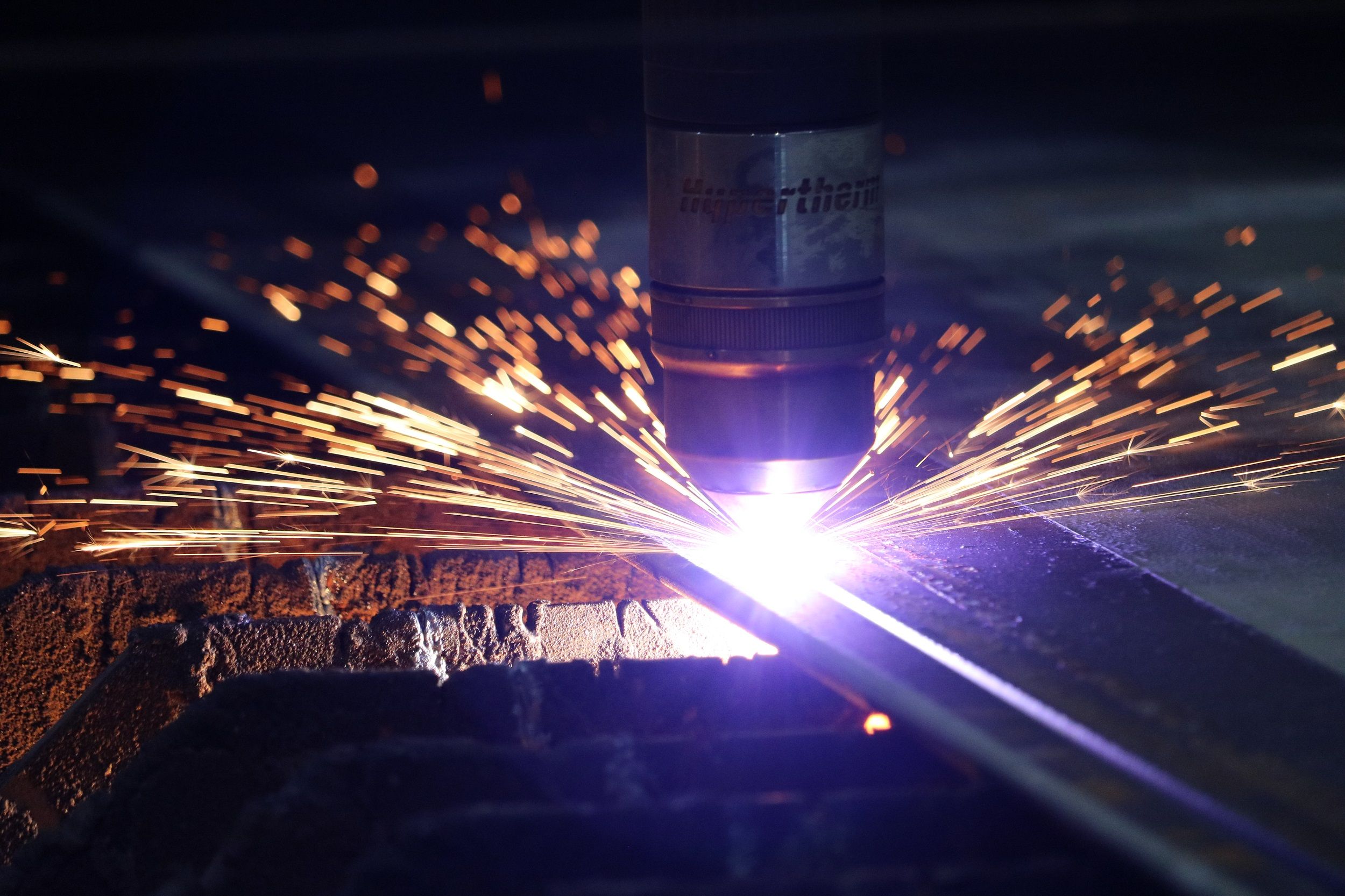
Plasma Cutting vs Laser Cutting: Which Is Better for Steel Plate
Steel plate fabrication is rarely a one-size-fits-all deal. A shop turning out structural base plates for heavy equipment faces completely different challenges than a shop cutting detailed enclosures or precision brackets. That is exactly why the conversation around plasma cutting vs laser cutting keeps coming up across manufacturing, construction, and industrial fabrication.
Both processes use heat to slice through metal. Both can be guided by CNC automation for repeatable results. But the way they work is completely different. One leans toward heavy-duty cutting power and lower operating cost. The other prioritizes precision, cleaner edges, and tighter dimensional control. The right choice affects more than the cut itself.
So, which option is better for your project? Explore this guide to learn more, so you can decide whether laser cutting vs plasma makes sense for your next steel job.
Why Cutting Method Matters for Steel Plate
The cutting stage sets the tone for everything that follows in fabrication. A poor edge finish can add grinding time. Loose tolerances can create fitment problems during assembly. Excessive heat can distort parts and slow production.
That is why the cutting method matters long before a finished component leaves the shop floor.
For example, parts requiring tight tolerances or intricate geometry typically require a cleaner, more controlled cutting process. Fabricators working with detailed profiles often prioritize edge quality because secondary cleanup adds both labor and production cost.
Material thickness changes the equation, too. A thicker steel plate requires more cutting energy, and not every system handles heavy material efficiently. Some processes maintain precision at higher thicknesses, while others trade fine detail for speed and lower operating expense.
Production volume also plays a role. A process that works well for short-run custom fabrication may not be the most economical option for repetitive industrial cutting.
Comparing laser cutting vs plasma cutting is really about balancing tolerance, finish quality, throughput, and cost against the requirements of the finished part.
What Is Plasma Cutting?
Plasma cutting goes back to the 1950s. It uses a high-velocity stream of electrically conductive gas forced through a narrow nozzle. An electric arc heats the gas into plasma, which melts the steel and blows the molten metal out of the cut.
Plasma cutting requires an electrical circuit to operate. So it only works on metals that conduct electricity. Common plasma-cut materials include steel, stainless steel, brass, titanium, copper, and aluminum.
What Is Laser Cutting?
Laser cutting came along after plasma. It uses a highly concentrated beam of light to heat, melt, and partially vaporize the material. Most machines also use an assist gas, such as nitrogen or oxygen, to blow the melted residue out of the cut.
Laser cutting can process a wider range of materials than plasma, including certain plastics, wood, glass, and stone, depending on the laser type and system setup. For metals, it is commonly used on steel, stainless steel, aluminum, and nickel.
Plasma Cutting vs Laser Cutting: Main Differences
Plate Thickness
Thickness remains one of the biggest factors in plasma vs laser cutting steel decisions.
Plasma systems have long been favored for thick steel plates because they cut heavy conductive material efficiently and at relatively low operating cost. Structural fabrication shops still depend heavily on plasma for this reason.
Laser systems generally perform best on thinner and medium-thickness steel, where precision and edge quality matter more. However, modern high-power fiber lasers have expanded well beyond traditional thickness limitations and now compete more directly with plasma in heavy plate applications.
Precision and Tolerance
Laser cutting wins on precision, plain and simple. The beam is narrow, so the kerf stays small and the corners come out clean. That means you can cut intricate profiles and detailed features that a plasma machine just cannot match in accuracy.
Plasma cutting still gets the job done for general fab work. No question about it. But the kerf is wider, and the heat-affected zone is bigger, so you lose some of that fine control. When tight dimensional control matters, laser cut vs plasma cut comparisons almost always favor laser technology.
Edge Quality
Laser cutting generally produces smooth, clean edges with minimal burrs or slag. In many cases, the parts can move directly into welding, forming, or finishing operations without additional cleanup.
Meanwhile, plasma-cut edges are rougher by comparison and often require grinding to remove slag or improve edge consistency. That difference matters in production environments where secondary finishing adds labor hours and slows throughput.
Cutting Speed
Laser systems are typically faster on thinner materials while maintaining higher precision. Plasma systems often perform competitively on thicker plates, particularly when cut quality requirements are less demanding.
Cost
The financial comparison involves weighing upfront capital investment against long-term operating expenses. A CNC laser system requires a significantly higher initial capital expenditure than a comparable plasma table. However, when high-speed laser production eliminates secondary grinding labor, the total per-part cost often becomes far more economical than plasma.
When Plasma Cutting Makes More Sense
Plasma cutting is still the right tool for certain jobs. You should consider plasma when:
- You are cutting a steel plate over 1.5 inches thick, especially if you do not have a high-power fiber laser.
- You need simple profiles where tight tolerances are not required.
- You are doing heavy fabrication like structural steel, large equipment parts, or industrial construction.
- Upfront budget is tight, and you cannot justify the capital cost of a laser.
- Minor finishing is acceptable, meaning your team can grind edges without killing the schedule.
- You are cutting conductive metals only, and you do not need to cut wood, plastic, or other non-conductive materials.
When Laser Cutting Makes More Sense
Laser cutting shines when details matter. Go with a laser when:
- You need tight tolerances, fine features, or small holes with excellent roundness and little taper.
- Edge quality matters, and you want parts that are weld-ready without grinding.
- You are cutting a thinner plate, typically up to one inch thick, though high-power lasers handle more.
- Accuracy matters more than the lowest upfront cutting cost. If rework or finishing eats up savings, laser wins.
- You have complex part geometry with tight radii, intricate notching, or internal features.
- You want to avoid secondary holemaking operations like drilling.
How to Choose the Right Cutting Method for Steel Plate
Making the right choice when it comes to plasma cutting vs laser means weighing several practical factors:
- Thickness: Laser is likely better for under an inch, but plasma might do a solid job if the material is over an inch and a half.
- Tolerance: If you need very tight tolerances, a laser is usually the safer choice. If you can live with 0.5 mm, plasma might work.
- Edge finish: Laser delivers clean edges, while plasma requires finishing.
- Budget: Plasma costs less upfront. But if you run high volume, a laser can pay back the difference in monthly savings.
- Part complexity: Laser handles complexity, while plasma handles simple profiles.
- Production volume: At high utilization, laser throughput saves money. At low volume, plasma might be simpler.
Conclusion: Plasma or Laser Cutting for Steel Plate?
Nobody can point to one method and call it the absolute best in the plasma vs laser cutting steel conversation. It really comes down to what you are building.
Plasma makes sense for thicker, simpler steel plate work, while laser shines when you need precision, clean edges, and detailed parts. So look at your plate thickness, tolerance requirements, budget, and how much finishing you are willing to do. Then pick the method that fits that job.
FAQ
Recent Posts
Hot Rolled vs Cold Rolled Steel Plate: What’s the Difference
What Is Mill Test Report? Steel Plate Buyer’s Guide
Common Industrial Uses of Steel Plate in Modern Fabrication
Abrasion Resistant Steel Plates: Grades, Properties, and Applications