Hot Rolled vs Cold Rolled Steel Plate: What’s the Difference
Look at two steel plates side by side, and they might seem pretty much the same. But grab the wrong one for your job, and you will find yourself fighting warped material on a precision bend or paying way too much for a rough structural frame that never needed a perfect finish in the first place.
Getting a handle on how hot rolled vs cold rolled steel actually differs helps you pick the right material for what you are really trying to do. Not just what looks good on a budget sheet.
Why the Rolling Method Matters in Steel Plate Selection
The rolling method is not just a production detail. It defines the plate’s personality. The method affects the surface condition, how tight the dimensions stay, how easily the steel bends or welds, the final price tag, and whether the material works for heavy structural components or finished panels.
Some fabricators chase strength. Others need tight dimensional accuracy. Many just want a material that will not fight back during forming. The choice between hot rolled steel vs cold rolled steel touches every step from the cutting table to the final install. Ignore the rolling method, and you are gambling with the fit-up, finish work, and overall project cost.
What Is Hot Rolled Steel Plate?
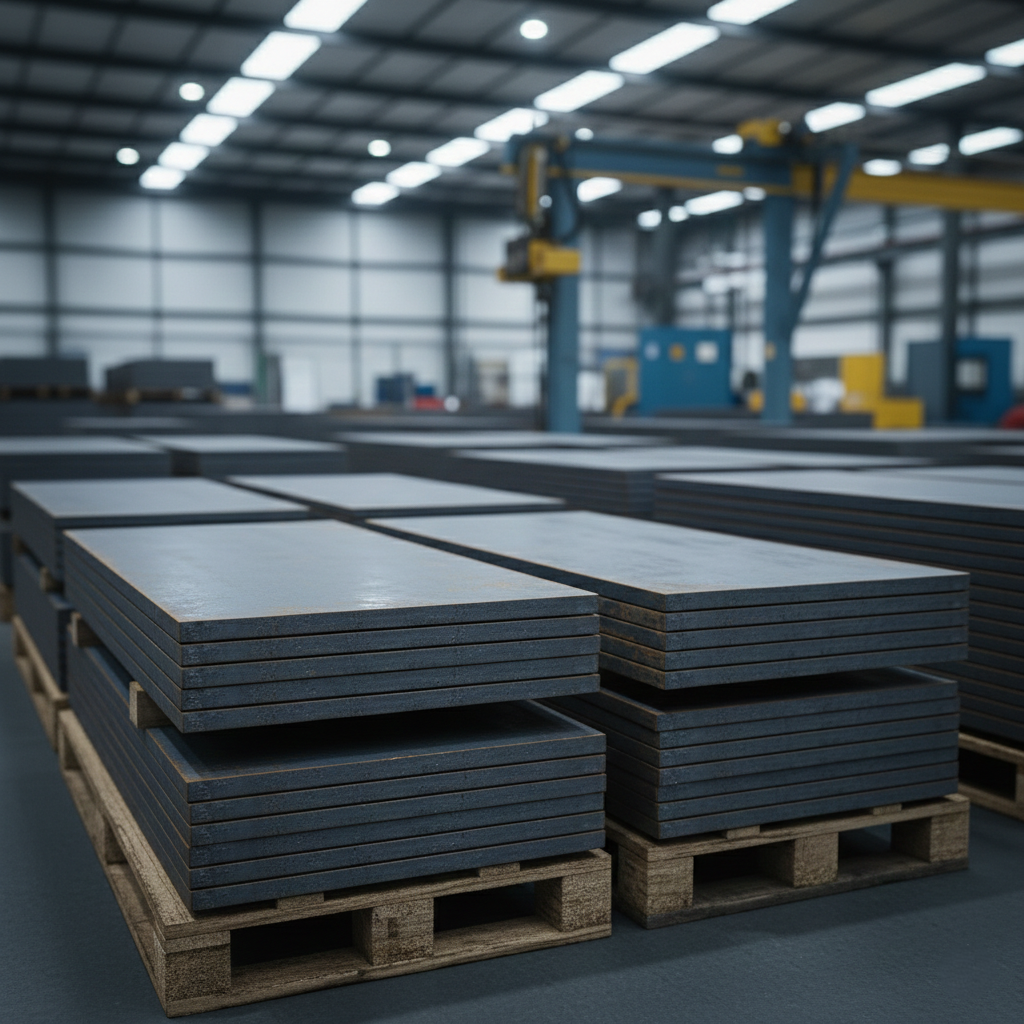
Hot rolled steel plate starts as a large slab, billet, or bloom heated above the steel’s recrystallization temperature, typically over 1700°F. At that heat, the steel becomes soft and malleable. It runs through a series of rollers at high speeds to hit the desired shape and thickness. Then it cools at room temperature.
Because it shrinks slightly and unevenly as it cools, it does not hold super-tight tolerances. The surface usually comes out with a rough, scaly finish from oxidation. That scale can be removed later through pickling, grinding, or sandblasting. But in its standard form, hot rolled steel is all about getting large, tough shapes made quickly without a lot of extra handling.
What Is Cold Rolled Steel Plate?
Cold rolled steel is not a completely different grade of steel. It starts its life as hot rolled steel. Then it goes through additional processing. After the hot rolled material cools to room temperature, it is run through cold reduction mills, followed by annealing and sometimes temper rolling. That extra processing produces steel with much tighter dimensional tolerances and a noticeably smoother, cleaner surface, often oily to the touch.
Hot Rolled vs Cold Rolled Steel Plate: Key Differences
The differences between cold rolled vs hot rolled steel show up across five practical categories that matter to anyone who cuts, bends, or welds metal.
Surface Finish
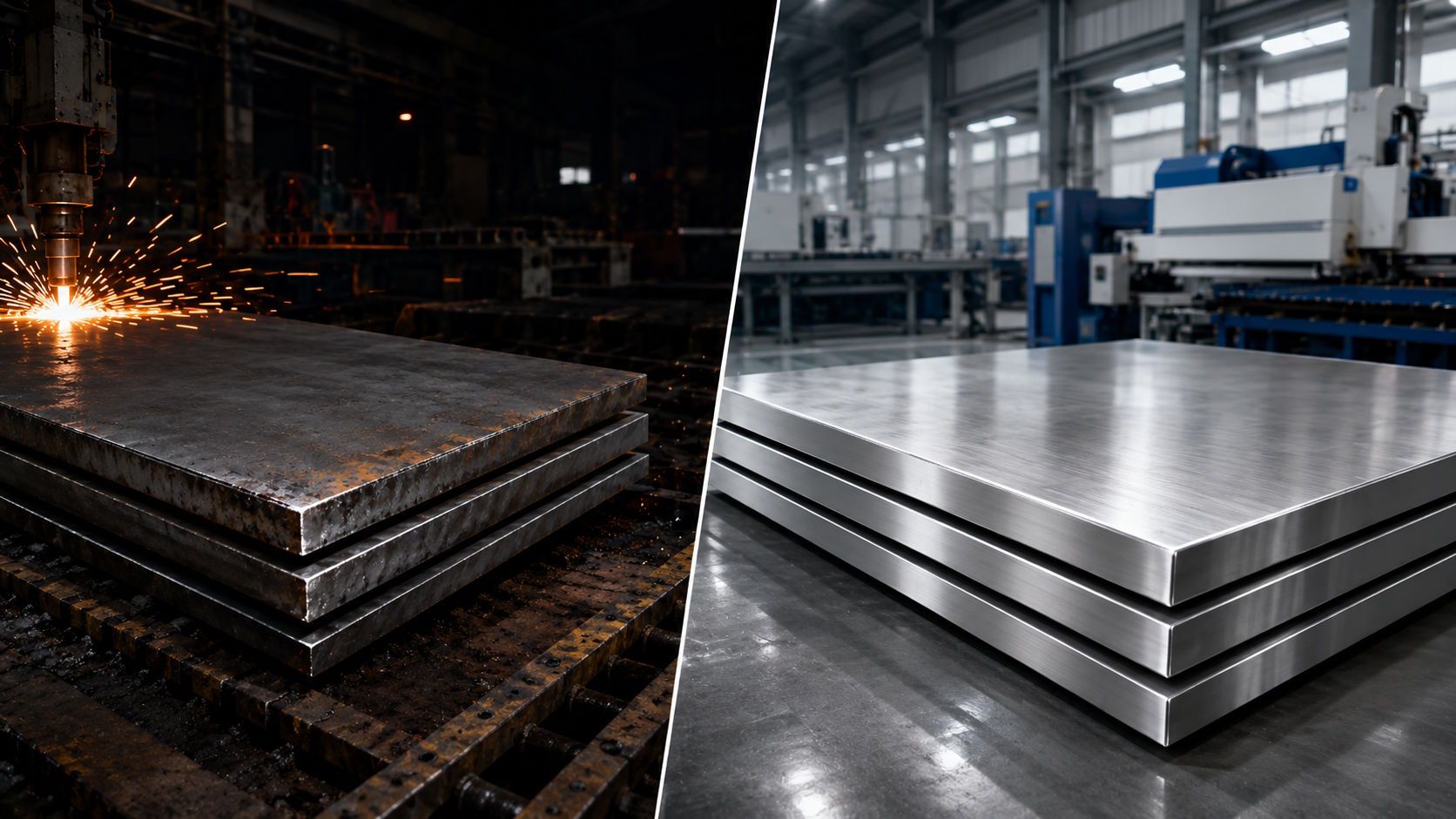
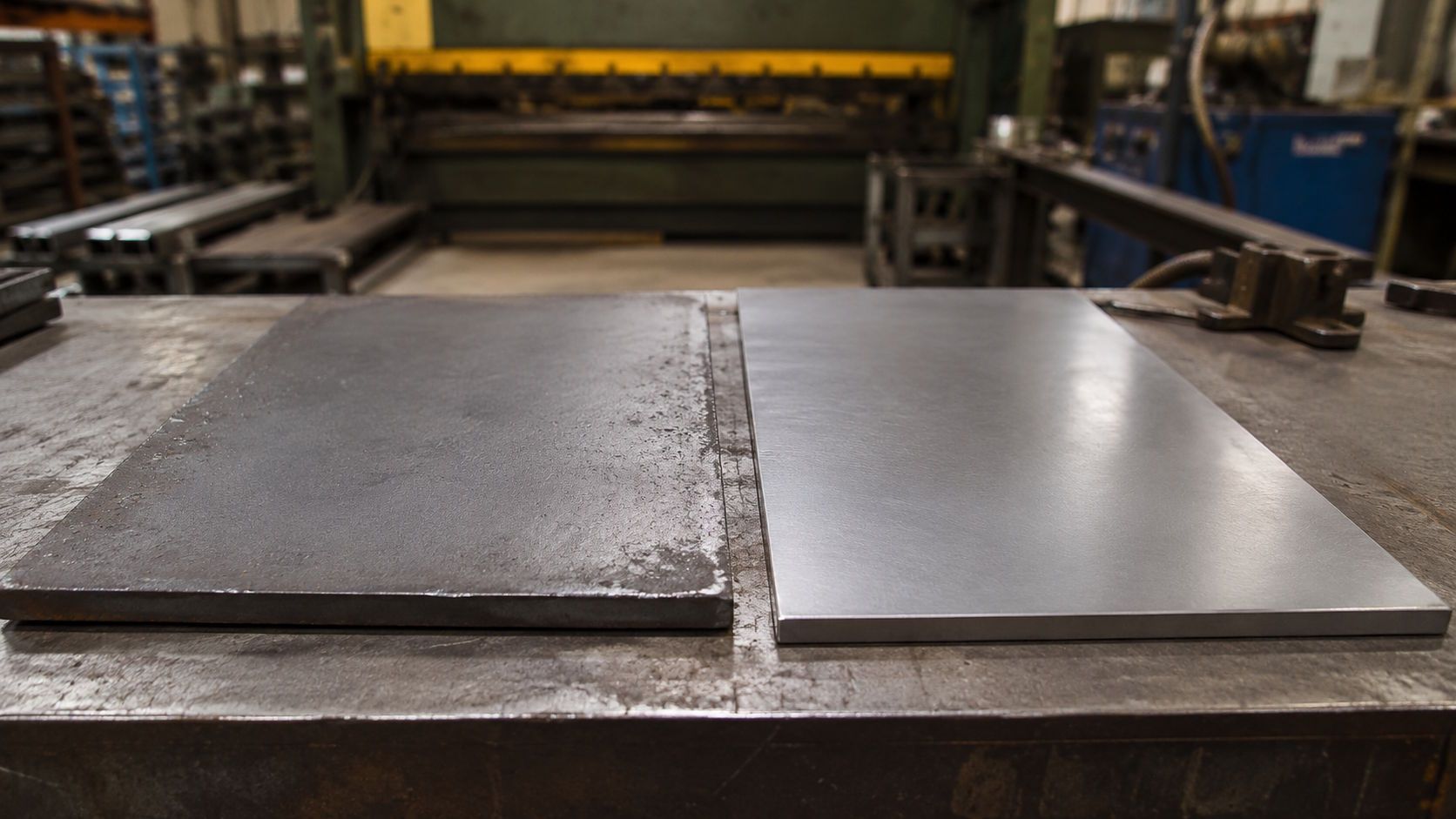
Hot rolled plate carries mill scale and a rougher, slightly irregular surface from the high-temperature cooling process. It is not pretty, but for structural work, that often does not matter. Cold rolled steel, on the other hand, delivers a smooth, almost polished surface with no scale. It looks cleaner and feels smoother, which is why it shows up in visible finished products.
Dimensional Accuracy
Hot rolled steel shrinks when it cools. That is just what it does. So you end up with slight distortions, rounded edges, and tolerances that are a little looser.
Cold rolled steel gets worked at room temperature. That makes a big difference. It holds much tighter dimensions. So if your application needs precision, flatness, straightness, and tight tolerances, the choice between cold rolled steel vs hot rolled steel is pretty simple. Cold rolled wins for accuracy.
Strength and Workability
Cold rolling increases strength and hardness through strain hardening. That makes cold rolled plate stronger in raw numbers. However, hot rolled steel is more malleable and ductile. It handles welding and heavy forming without the same risk of warping from internal stresses. Hot rolled steel also tends to have lower internal stress, which can make it more forgiving in heavy forming and welded applications.
Cost and Production Efficiency
Hot rolled steel is almost always cheaper. It requires fewer processing steps, no reheating, and no additional cold-reduction passes. Cold rolled steel costs more because of the additional processing, annealing, and temper rolling. When budget drives the decision, and tolerances are loose, hot rolled is the economical workhorse.
Appearance and Final Use
If the steel will be visible, painted, or left exposed, cold rolled steel delivers a better-looking part. Its smooth surface and sharp edges look finished. Hot rolled plate works fine where appearance does not matter, like inside a machine base or under a coat of heavy industrial paint. The choice between cold vs hot rolled steel often comes down to whether anyone will actually see the finished surface.
Common Applications for Hot Rolled and Cold Rolled Steel Plate
The table below breaks down where each material shines in real-world jobs.
| Application Type | Hot Rolled Steel Plate | Cold Rolled Steel Plate |
|---|---|---|
| Structural components | Base plates, gussets, brackets, frames, railroad components | Not typical |
| Heavy equipment | Agricultural equipment, vehicle frames, stampings | Limited use |
| Limited use | Metal buildings, industrial frames, machinery bases | Light structural only |
| Precision parts | Rarely used | Precision brackets, automotive parts, stamped components |
| Finished components | Not recommended | Home appliances, metal furniture, bracket |
| Panels and enclosures | Rough service panels only | Smooth finish panels, electronics enclosures |
| Large fabrication projects | Yes, ideal | No, too costly and less available in heavy gauges |
How to Choose Between Hot Rolled and Cold Rolled Steel Plate
Choosing between hot rolled vs cold rolled steel plate comes down to practical decision factors, not marketing hype.
Start with the required tolerance. Does your part need tight dimensions or just a general shape? If you need precision, go cold rolled. Next, look at surface finish. Will the plate be visible or coated? Smooth and clean means cold rolled. Rough and hidden means hot rolled works fine.
Consider the fabrication process. Are you doing heavy welding and forming? Hot rolled steel is often more forgiving in heavy welding and forming applications. Need higher strength and hardness right out of the gate? Cold rolled delivers.
Then check your budget. Hot rolled saves money when the application allows it. Finally, look at plate thickness. Cold rolled is common in thinner gauges and sheets. Hot rolled dominates larger, thicker plates.
Match the material to the actual job requirements, not to what someone says is "better."
Common Mistakes When Comparing Hot and Cold Rolled Steel
One big mistake is choosing only by price. Hot rolled looks cheaper on paper, but if your job requires tight tolerances, you will pay more in rework and scrap than you save upfront.
Another error is assuming cold rolled is always better. It is not. Cold rolled steel can warp from internal stresses if overworked, and these stresses can make it less ideal for some heavy-welded assemblies.
Ignoring finish requirements is another trap. Buying cold rolled when the plate will be buried inside a machine base wastes money. Conversely, using hot rolled for a visible finished panel means extra labor grinding off scale and filling pits. Overlooking tolerance needs hurts, too. If your design calls for a precise fit and you grab hot rolled, expect disappointment.
Conclusion: Matching Rolled Steel Plate to the Right Use
The difference between hot rolled vs cold rolled steel plates is not about one being good and the other bad. It is about matching the material to the job. Hot rolled gives you lower cost, good weldability, better workability, and a rough surface for heavy structural work. Cold rolled delivers tighter tolerances, a smooth finish, higher strength, and precision for finished components.
No single answer covers every job. But now you know exactly what drives the differences. Choose based on your actual tolerances, your surface-quality requirements, your fabrication methods, and your budget.
FAQ
Recent Posts
Plasma Cutting vs Laser Cutting: Which Is Better for Steel Plate
What Is Mill Test Report? Steel Plate Buyer’s Guide
Common Industrial Uses of Steel Plate in Modern Fabrication
Abrasion Resistant Steel Plates: Grades, Properties, and Applications