
Abrasion Resistant Steel Plates: Grades, Properties, and Applications
The "total cost of ownership" is a metric that distinguishes successful operations from those that constantly chase repairs in heavy-duty fabrication. Choosing a standard structural steel for high-wear environments is a common trap; while the upfront cost is lower, the inevitable failure under the stress of grinding aggregates or heavy ore is a guarantee. This is why abrasion resistant steel plates are the standard in durable applications that demand longevity.
What Is Abrasion Resistant Steel?
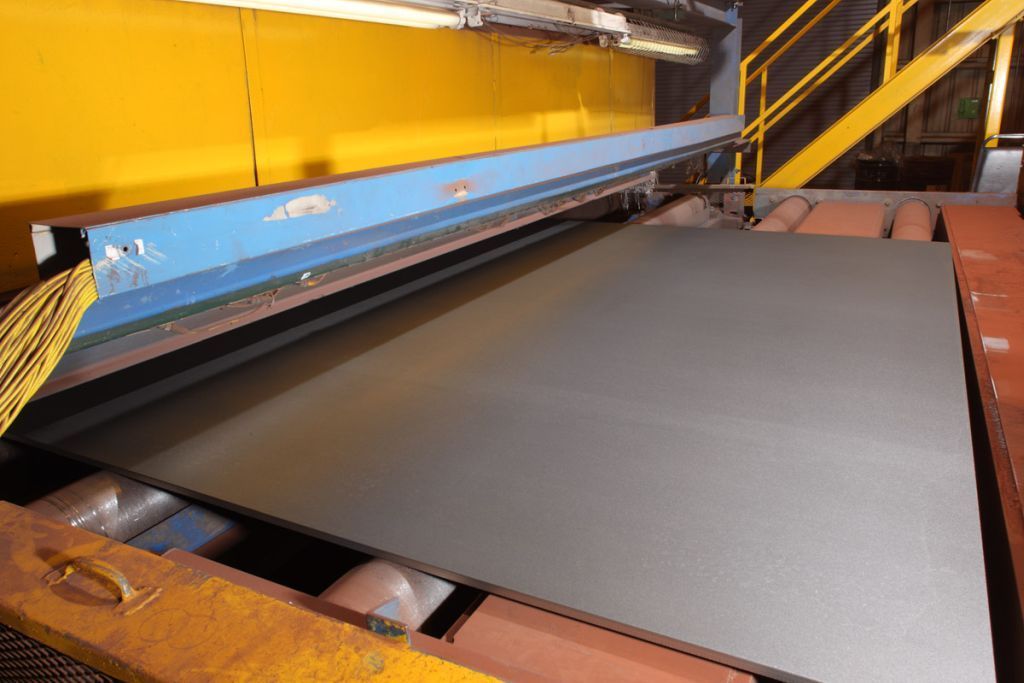
This is a special type of steel that has been formed into a flat, rectangular shape, typically ranging from a few millimeters to several inches thick. These plates are the raw material used to fabricate durable components. They are not typically used as primary structural members because the heat treatment and chemistry that deliver high hardness can reduce ductility, toughness, and weldability compared to structural steels. Instead, they are used as liners, wear surfaces, and components in machinery that face high abrasion.
What Is AR Steel Plate?
What does “AR” mean in steel plates?
AR is the universal shorthand for Abrasion Resistant. The number that follows the “AR” represents the material's nominal hardness rating on the Brinell scale. For example, AR400 steel has a nominal hardness of 400 on the Brinell Hardness Number (BHN) scale.
How abrasion-resistant steel plates are manufactured
Abrasion-resistant steel plate is typically produced by rolling a steel plate and then applying a quench-and-temper heat treatment to achieve a through-hardened microstructure.
First, the steel is heated to an extremely high temperature, typically between 1,500 and 1,650 degrees Fahrenheit. Once it reaches this austenitic state, the process moves to the "quenching" phase. The red-hot plate is rapidly cooled using controlled quenching (e.g., water or polymer quench systems), forming a hard martensitic microstructure. This rapid cooling, or quenching, traps carbon atoms within the iron structure, creating a hard, martensitic crystalline formation. This is what gives the steel its extreme hardness.
However, quenching alone can leave the steel too brittle. After the initial heat treatment, the steel goes back into the furnace for a second round, but this time the temperature is kept much lower, between 300°F and 700°F, followed by a slow, controlled air-cool. This is called "tempering," and it’s essentially the fine-tuning stage of the process.
This step is what ensures a plate won't snap like glass when it takes a sudden hit on the job site. The end goal is a "through-hardened" plate, one where the structural integrity and hardness aren't just a surface, but are consistent from the top face all the way through the core.
Abrasion Resistant Steel Plate Properties
The value of any material lies in its properties. All abrasion resistant steel plate properties are carefully balanced to deliver superior performance in demanding environments.
Hardness and wear resistance
Hardness is the primary defense against "sliding abrasion," where materials like sand or gravel slide across the surface. The higher the BHN, the less material is lost over time. Because AR steel is "through-hardened," this resistance remains constant even as the plate wears down. This differs from "case-hardened" steels, which only have a thin protective shell and lose their effectiveness once the surface layer is breached.
Impact resistance vs abrasion resistance
- There’s always a trade-off here. As hardness increases, impact tolerance usually decreases.
- Take AR600. On paper, it looks unbeatable against sliding wear. It shrugs off gouging and surface abrasion that would quickly scar a milder plate. But push it into a high-impact application, such as large rock fragments dropping from a height, and brittleness becomes a real concern. An extremely hard plate can crack instead of flexing.
- By contrast, AR400-AR450 typically offer better impact tolerance and formability, while AR500 and higher prioritize wear resistance in high-sliding-abrasion applications where material flows continuously across the surface. But under massive, concentrated impact loads, they’re less forgiving. If the application involves blunt-force shock rather than sliding abrasion, the harder grade isn’t automatically the better choice.
Weldability and formability considerations
It stands to reason that the very things that make a plate tough to wear down also make it tough to work with in the shop. As the hardness rating climbs, your ability to bend or weld that steel drops off significantly.
- Formability: If you need to put a radius on a liner, you’ll want to look for "F" designated grades, like AR400F. This label tells the shop that the plate is specifically designed to be formable, allowing it to be bent to a certain degree without the metal grain fracturing at the corner.
- Weldability: You can definitely weld AR steel, but you can’t just "wing it." To do it right, you have to follow strict procedures. This usually means using low-hydrogen electrodes and keeping a close eye on your preheat and interpass temperatures.
Surface durability and lifespan benefits
The ultimate payoff of AR steel's properties is a dramatic extension in the lifespan of equipment and components. Because the material is through-hardened, it maintains its wear-resistant characteristics even as the surface gradually wears away. This means components last significantly longer than those made from conventional steel, sometimes up to several times longer in high-wear applications.
Abrasion Resistant Steel Grades Explained
Now that you understand what abrasion-resistant steel is, how is it graded in engineering? Let’s find out:
Common AR grades (AR400, AR450, AR500)
- AR400: The workhorse of the industry. It offers a great mix of abrasion resistance, weldability, and formability.
- AR450: A "step-up" grade that provides extra wear life while remaining relatively easy to weld and form.
- AR500: Used for extreme wear applications. It is typically harder than AR400 and often comes with higher yield and tensile strength, but exact mechanical properties vary by manufacturer and specification.
Differences between AR400 vs AR500
The primary difference is the balance of ductility versus hardness. AR400 is better for liners that need to be bent into shapes or for parts subjected to high impact. On the other hand, AR500 is the preferred choice for flat plates in high-wear zones, such as gun range targets, crusher liners, and cutting edges.
How to choose the right abrasion resistant steel grade
Selecting the right grade is a classic engineering trade-off. The decision hinges on the primary failure mode of the part. If the main threat is gouging and severe sliding abrasion, a harder grade like AR500 will often provide longer wear life. However, for applications dominated by heavy impact, a slightly softer and tougher grade may perform more reliably. In short, you balance the need for wear resistance against the need for workability.
Benefits of Abrasion Resistant Steel Plates
Investing in abrasion resistant steel plates goes beyond simply buying a harder material. The benefits are holistic, impacting everything from operational budgets to equipment design.
- Extended service life
This is the most direct benefit. AR steel plates are built to last in environments that would quickly destroy mild steel. In highly abrasive applications like iron ore mining, premium AR grades can deliver dramatically longer service life than standard structural steel.
- Reduced downtime and replacement costs
Longer-lasting components mean fewer emergency shutdowns for repairs and less frequent need for replacement parts. This reduction in downtime and maintenance directly improves the bottom line by keeping operations running smoothly.
- Improved performance in harsh environments
AR steel maintains its structural integrity under conditions that involve constant abrasion, heavy impact, and even weathering. This reliability is critical in industries like mining and construction, where equipment failure can have serious safety and productivity consequences.
Industrial Uses of Abrasion Resistant Steel Plates
Mining and quarry equipment
This is perhaps the most prominent application for AR steel. Everything in a mine or quarry is designed to move rock, and rock is highly abrasive. Abrasion resistant steel plates are used to line dump truck bodies, chutes, hoppers, and buckets, protecting the underlying structure from being ground away. Crushers, feeders, and excavation tools are also frequently made from or lined with AR steel to withstand the constant punishment.
Construction and earthmoving machinery
Bulldozer blades, loader buckets, compactors, and excavator attachments face continuous contact with soil, gravel, and debris. AR steel provides the toughness needed to keep these machines working efficiently. Structural beams on heavy equipment can also benefit from the wear resistance of AR plate.
Bulk material handling and conveyors
In any operation that moves bulk solids, from grain to coal, conveyor systems are the arteries. Chutes, transfer points, screw conveyors (augers), and hopper liners are all common applications for abrasion resistant steel. The smooth, hard surface of the AR plate helps materials flow more easily while resisting the abrasive wear that would eventually wear a hole through standard steel.
Recycling, scrap, and waste processing
This industry is inherently punishing. Shredders, compactors, sorting lines, and containers handling scrap metal, concrete, and waste are subjected to extreme impact and abrasion. AR steel is often the material of choice for lining these components to withstand the abuse.
Agriculture and heavy-duty manufacturing
Even outside of heavy construction, AR steel has a place. Agricultural tooling, such as plow blades and tillage equipment, benefits from the wear resistance to constantly abrade against soil. In manufacturing, it's used for heavy equipment liners, tooling, and parts in machinery that processes raw, abrasive materials.
Selecting the Right Abrasion Resistant Steel Plate
When deciding which AR steel plate is right for your specific needs, consider these four factors:
- Application type: Is the wear caused by sliding (chutes) or impact (crushers)?
- Wear mechanism: Are you dealing with fine sand (low impact, high abrasion) or large rocks (high impact, high abrasion)?
- Required hardness: Match the BHN to the material being handled. Harder materials generally require harder steel.
- Fabrication constraints: Can you weld it? Can you bend it? If you need complex shapes, stick to the 400 or 450 grades.
Conclusion: Why Abrasion Resistant Steel Plates Matter
Abrasion resistant steel plates are about protecting your investment. They are the unsung heroes in the buckets, chutes, and liners of the world's toughest machinery. By understanding the differences between the grades, you ensure you're not just fixing a problem but preventing it. It’s about building equipment that can stand up to the job and keep running, no matter how much the world tries to grind it down.
Recent Posts
Carbon vs Stainless Steel Plate: What Separates These Materials
Beyond the Mill: The Strategic Value of Single-Source Plate Processing